




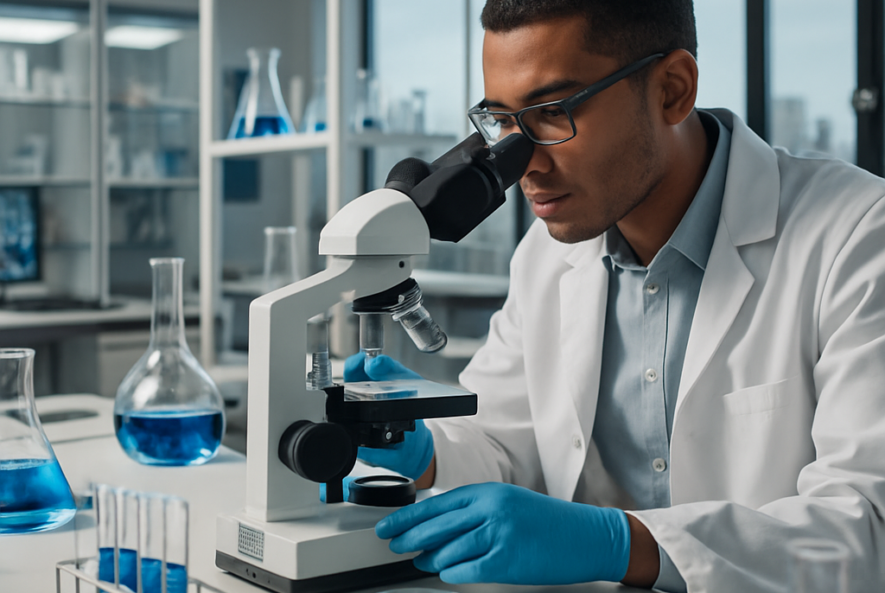
Peptides are short chains of amino acids that play crucial roles in biological processes and have significant applications in medicine, research, and industry. The synthesis and manufacturing of peptides require precise techniques and meticulous quality control to ensure the desired biological activity and purity. This article provides a comprehensive overview of the methods used by scientists to synthesize peptides, detailing the step-by-step assembly process and the key considerations involved in manufacturing and quality assurance.
Overview of Peptide Synthesis Techniques and Methodologies
Peptide synthesis primarily relies on solid-phase synthesis techniques, with the most common being the Merrifield solid-phase peptide synthesis (SPPS). In this approach, the peptide chain is assembled stepwise on a solid resin support, allowing for efficient and automated synthesis. The process involves sequential addition of protected amino acids, which are activated and coupled to the growing chain. Protecting groups are used to prevent undesired reactions, and after each coupling, excess reagents are washed away. This methodology enables the rapid and high-yield production of peptides, even with complex sequences. Alternative techniques, such as liquid-phase synthesis, are also employed for longer or more complex peptides but are generally less efficient for routine synthesis.
Advancements in peptide synthesis methodologies have expanded capabilities to produce modified or non-natural peptides, including those with post-translational modifications or backbone alterations. Techniques like microwave-assisted synthesis and automated synthesizers have increased efficiency and reproducibility. Additionally, techniques such as native chemical ligation allow the assembly of larger peptides or proteins from shorter fragments, broadening the scope of peptide manufacturing. These methodologies continue to evolve, addressing challenges related to sequence length, purity, and synthesis speed, ultimately enabling the production of peptides tailored for diverse scientific and therapeutic applications.
Step-by-Step Process of Peptide Assembly and Purification
The synthesis of peptides begins with the attachment of the initial amino acid to a solid resin, which serves as the foundation for chain elongation. Protected amino acids are then sequentially added in a stepwise manner; each addition involves activating the carboxyl group of the incoming amino acid and coupling it to the amino terminus of the growing chain. After each coupling, the reaction mixture is washed to remove unreacted reagents, and a deprotection step removes the protective group from the amino terminus, preparing it for the next amino acid addition. This iterative process continues until the full peptide sequence is assembled, with the final step involving cleavage from the resin and removal of side-chain protecting groups.
Following synthesis, the crude peptide mixture often contains impurities, truncated sequences, and residual reagents, necessitating purification. High-performance liquid chromatography (HPLC) is the most common technique used to isolate the target peptide based on differences in polarity and hydrophobicity. The purified peptide is then characterized using methods such as mass spectrometry and amino acid analysis to confirm its identity and purity. Lyophilization (freeze-drying) is typically employed to convert the purified peptide into a stable, dry powder suitable for storage and further use. Ensuring high purity and correct sequence fidelity at this stage is critical for downstream applications in research and therapeutics.
Manufacturing Considerations and Quality Control in Peptide Production
Manufacturing peptides at an industrial scale involves several critical considerations to ensure consistency, safety, and efficacy. One key factor is the scalability of the synthesis process, which requires automation and optimization of reaction conditions to produce large quantities without compromising quality. Cost-effectiveness is also vital, influencing choices such as the type of synthesis method, reagents, and purification techniques. Additionally, manufacturing facilities must adhere to Good Manufacturing Practice (GMP) standards, which govern cleanliness, documentation, and process validation to meet regulatory requirements, especially for therapeutic peptides.
Quality control (QC) is integral to peptide manufacturing, encompassing rigorous testing at multiple stages. Analytical techniques such as HPLC, mass spectrometry, and amino acid analysis are employed to verify peptide identity, purity, and structural integrity. Endotoxin testing, microbial contamination assessments, and stability studies are conducted to ensure safety and shelf-life. Throughout production, batch records are meticulously maintained to trace each step, and final products undergo comprehensive QC assessments before release. These stringent quality assurance measures are essential to produce reliable, high-quality peptides suitable for research, diagnostics, or therapeutic use, thereby safeguarding both scientific integrity and patient safety.
The synthesis and manufacturing of peptides involve sophisticated techniques that combine chemical precision with rigorous quality control. From the initial assembly on solid supports to final purification and testing, each step is critical to producing high-quality peptides for diverse applications. As technological advancements continue, peptide synthesis methodologies are becoming more efficient and versatile, supporting ongoing innovations in biomedical research and therapeutics. Understanding these processes provides insight into the complex yet essential work that underpins the development of peptide-based products.